

Ah, yes, overeating.
It happens to everyone, especially when you’re learning.
Just like learning to drive, you’re going to make mistakes. Sometimes that mistake is missing your calories by a few hundred… or a few thousand.
The good news?
One high-calorie day is not the end of your fat loss. Not even close. In this article, I’ll break down what actually happens when you go over your calories, why the scale jumps, and why it barely matters in the big picture.
Did You Actually Gain Fat, Or Are You Just Panicking?
Short answer: You didn’t gain real fat, merely negligible.
When you’re dieting, your body first expends:
- Glycogen (stored carbs)
- Water
- Fat (eventually)
So after days or weeks in a deficit, those stores are low.
When you eat more calories again, your body does what it’s designed to do:
→ Refills glycogen
→ Pulls water back into your muscles
→ Restores balance
And suddenly… boom, the scale is up 1–3 kg overnight.
That weight is almost entirely water and food volume, not fat.
At most, you gained a trace amount of fat — nothing visible and nothing you can’t burn off in 24–48 hours.
Takeaway:
Don’t panic! It’s water, glycogen, and noise, not fat.
One Bad Day vs Real Fat Gain
Body fat doesn’t appear overnight.
Real fat gain happens after:
- Repeated overeating
- Weeks of consistent surplus
- Poor habits stacked over time
One bad day is like a drop in the ocean.

In fact, overeating often:
- Increases energy levels
- Boosts subconscious movement (NEAT)
- Leads you to burn more calories the next day
- Regulates your mood.
That’s why a single bad day, or even a bad weekend, rarely turns into fat unless it becomes the routine.
Why the Scale Spikes Overnight
The scale jumps because of carbs and water, not fat.
Here’s the key detail most people miss:
→ 1 gram of carbs stores 3–4 grams of water
So if you eat:
- Pizza
- Sushi
- Tacos
…and consume ~250g of carbs, that alone can add ~1 kg of water weight.
Add sodium, inflammation, and undigested food, and you’ve got a neutron star down there.
That weight is temporary.
It drops once carbs, salt, and digestion normalize.
How Much Damage Did You Really Do?
Very little! (phew)
Even a 10,000-calorie day would theoretically yield about only 1 kg of fat, and in reality (my experience), it’s usually closer to 0.5 kg or less.
Why?
- Increased thermogenesis
- More movement afterward
- Poor calorie absorption at extreme intakes
And here’s the most important part most people forget:
You don’t gain fat until you exceed maintenance calories.
If:
- Maintenance = 2,500 kcal
- Diet calories = 1,800 kcal
- You eat 2,300 kcal
You didn’t ruin your deficit. You just slowed fat loss for one day.
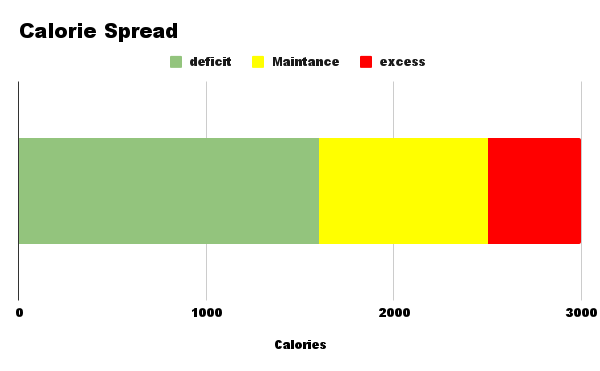
Fat gain only starts above maintenance, not above your diet target.
Remember that!
How to Get Back on Track After Exceeding Your Calories
Do nothing special.
✔️ Resume your normal deficit
✔️ Train as usual
✔️ Keep steps consistent
Don’t:
❌ Slash calories
❌ Add panic cardio
❌ Punish yourself
Think of fat loss like a flowing hose:
- Your deficit is the hose
- Fat loss is the water
One bad day just pinches the hose briefly.
The flow resumes the moment you return to the plan. Any scale weight gained will fall off in a few days, should you bounce back.
Bottom Line
One high-calorie day:
- Does not stop fat loss.
- Does not equal fat gain.
- Does not matter long-term.
It may stall fat loss, but given the severity of your binge, it might have just slowed you down by only 12 hours on the way to your ultimate goal!
Consistency beats perfection, every time.
Remember that!